
Summary
Living with glaucoma can affect mental and emotional well-being, not just vision. People may experience grief, anxiety, frustration, sleep problems, isolation, or worry about their condition worsening. These reactions are understandable and can be managed with practical, low-pressure strategies.
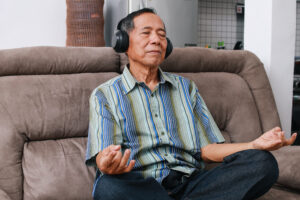
Practical Ways to Nurture Mental Wellness While Living with Glaucoma
For adults living with glaucoma while juggling work, family, and medical appointments, the hardest part often isn’t the drops or the tests, it’s the quiet emotional load. The glaucoma impact on mental health can show up as grief over changing vision, irritability, sleep disruption, or a constant scan for what might worsen next. These psychological effects of chronic eye disease are easy to dismiss as “just stress,” yet they can deepen isolation and make daily routines feel heavier. With steadier support and practical structure, mental wellness for glaucoma patients can become something that holds through uncertainty.
Quick Summary: Mental Wellness With Glaucoma
- Name your emotions and normalize grief, anxiety, or frustration as part of adjusting to glaucoma.
- Build predictable routines around treatment to reduce stress and support confidence and independence.
- Use practical coping tools like breathing, mindfulness, or journaling to manage anxious thoughts.
- Seek support through trusted people, peer communities, or counseling when worry or isolation grows.
- Protect daily quality of life by planning activities, asking for accommodations, and celebrating small wins.
Turn Feelings Into Images With a Gentle AI Mood Journal
Once you’ve picked a small experiment to try this week, it can help to capture what you’re feeling in a way that’s easier to hold than a string of words. An AI art generator can turn introspective thoughts, like worry about progression, frustration with eye drops, or quiet grief over changing vision, into calming, personalized digital artwork that supports mindfulness and self-reflection. When emotions feel hard to name, seeing them as an image can externalize them just enough to make space for curiosity instead of judgment, and a simple visual record can help you notice mood shifts over time. With tools that create AI art, you can type in a prompt to generate an image and then customize the style, colors, and lighting until it matches your inner weather.
Uncommon, Low-Pressure Practices That Calm Your Nervous System
When glaucoma is part of your daily life, your nervous system can stay on “alert” even when nothing is actively wrong. These low-pressure practices are designed to be glaucoma-friendly, meaning-centered, and easy to test in small doses, then track in your AI mood images so you can see what truly settles you.
- Try “micro” forest bathing: Instead of a big hike, do 10–15 minutes in the greenest spot you can access, yard, park bench, quiet street with trees. Keep it sensory and simple: notice temperature shifts, leaf movement, and the feeling of air on your face. For extra grounding, pair one photo or AI mood-image prompt afterward with a single caption like “today my body felt…”
- Go birdwatching by ear (not by sight): Sit in one spot for 5 minutes and count distinct calls, then describe them as “whistle,” “chip,” or “trill.” This works because focused listening gently narrows attention without forcing you to “think positive,” and it’s naturally accessible on low-vision days. If you enjoy structure, set a weekly “sound map” note: morning birds, midday quiet, evening insects.
- Do therapeutic volunteering in tiny, predictable roles: Choose roles with clear start/stop times and low sensory load, making phone check-ins, assembling care kits, stuffing envelopes, or mentoring by voice. Meaningful contribution can reduce rumination, especially when health feels uncertain. Think “one shift per month” first; consistency matters more than intensity.
- Use pet companionship as a daily co-regulation ritual: If you have a pet, try a 3-minute “soft focus” routine: one hand on your pet’s body, match breathing to their slower rhythm, and notice warmth and weight. If you don’t, consider borrowing calm animal time through a friend, neighbor, or shelter program. The goal isn’t entertainment, it’s teaching your body what safety feels like.
- Practice tai chi in chair-height range: Keep movements above the waist if bending or balance feels risky, and do 6–8 slow repetitions of one sequence (like “cloud hands”) rather than a full routine. Coordinate breath with motion, inhale to open, exhale to soften, and stop before fatigue. Logging the practice with a quick AI mood image (“steady,” “wobbly,” “spacious”) helps you spot the dose that calms rather than drains you.
- Try “eye-safe” progressive muscle relaxation: Start at the feet and move upward, tensing each area at 30–40% effort for 5 seconds, then releasing for 10 seconds. Skip face/eye squeezing and instead relax your jaw, tongue, and shoulders, tension often hides there when you’re worried about vision. This gives your body a clear off-switch when anxiety ramps up.
- Create a 2-sense “rescue kit” you can use anywhere: Pick two senses that reliably soothe you, touch and sound, or smell and warmth, and make it repeatable. Examples: a smooth stone plus a short playlist, or a lavender sachet plus a warm mug held in both hands. Treat it like a skill: 2 minutes, same steps, same order.
- Do “compassionate planning,” not productivity planning: Once a week, choose one small self-care action in each of the self-care practices buckets, body, mind, and mood/relationships. Keep each item under 10 minutes so your plan doesn’t become a new pressure source. If you already use an AI mood journal, add one image for “what support I needed” so your plan reflects real life.
- Adopt a “good-enough” exposure to uncertainty: Pick one glaucoma-related worry you usually avoid (appointments, drops schedule, future fears) and spend exactly 7 minutes with it, write it, voice-note it, or turn it into an AI image, then close the loop with a calming cue like tea or a short walk. This builds tolerance without spiraling. Over time, your brain learns that discomfort rises and falls, and you can stay with it safely.
Glaucoma and Mental Wellness: Common Questions
Q: What helps glaucoma-related anxiety the most when it spikes?
A: Start with your body, not your thoughts: slow your exhale, unclench your jaw, and feel your feet on the floor for 60 seconds. Then choose one repeatable cue like a brief sound track, a warm drink held in both hands, or a textured object in your pocket. A simple “after” note or mood image can help you learn what actually works in real life.
Q: How do I stay motivated when I’m tired of routines like eye drops?
A: Shrink the task until it feels doable: “just open the bottle” is a valid starting line. Pair drops with an existing anchor such as brushing teeth, and use alarms plus a checklist you can touch or hear. The missing doses risk matters, so aim for consistency over perfection.
Q: Can I do calming movements if I’m worried about balance or low vision days?
A: Yes, choose seated or close-to-support options like chair-based slow movement or gentle upper-body sequences near a counter. Keep sessions short and stop before you feel unsteady. If dizziness, nausea, or sudden vision changes show up, pause and contact your eye care team.
Q: When should I get extra mental health support instead of self-help?
A: Reach out if worry or low mood lasts most days for two weeks, disrupts sleep, or makes it hard to do basic tasks. A CDC study on adults with vision loss highlights how common anxiety or depression can be, so getting help is a strength, not a failure. Ask your primary care clinician or ophthalmologist for referrals, and consider crisis resources if you feel unsafe.
Q: What if my family thinks I’m “overreacting” about glaucoma stress?
A: Try a specific request instead of a debate: “Please walk with me to my appointment,” or “Can we keep the hallway clear?” Share one concrete way stress affects you, like sleep or concentration, and one thing that helps. Support often improves when people know exactly what to do.
A Good-Enough Monthly Plan for Mental Wellness With Glaucoma
Living with glaucoma can mean managing treatment and uncertainty while also carrying the quieter weight of worry, frustration, or low mood. A “good-enough” plan, built on self-compassion, realistic routines, and knowing when to ask for support, keeps mental health resilience within reach without demanding perfection. Over time, this approach makes proactive self-care feel less like another task and more like steadier ground, supporting long-term emotional wellness and positive outcomes of holistic care. Small, kind routines build the strongest resilience.
Article written by Camille Johnson
Exclusively for